
Beishan GDF Laboratory URL China - Peer Review by Ingenieurbüro Goebel - GDF Planners 15 yrs - Vorläufige Einschätzung : Nass ?, nicht gasdicht verschliessbar, ein Erdbeben kann es zerstören - Bitte prüfen Sie, ob es in China Steinsalz-Geologien gibt - Dome + flache Schichten
Beishan GDF underground lab does probably exist by now.
I had a fight with its developer 10 yeas ago - that it would
be wet, not gas-tight, and with no proof of undercriticalness
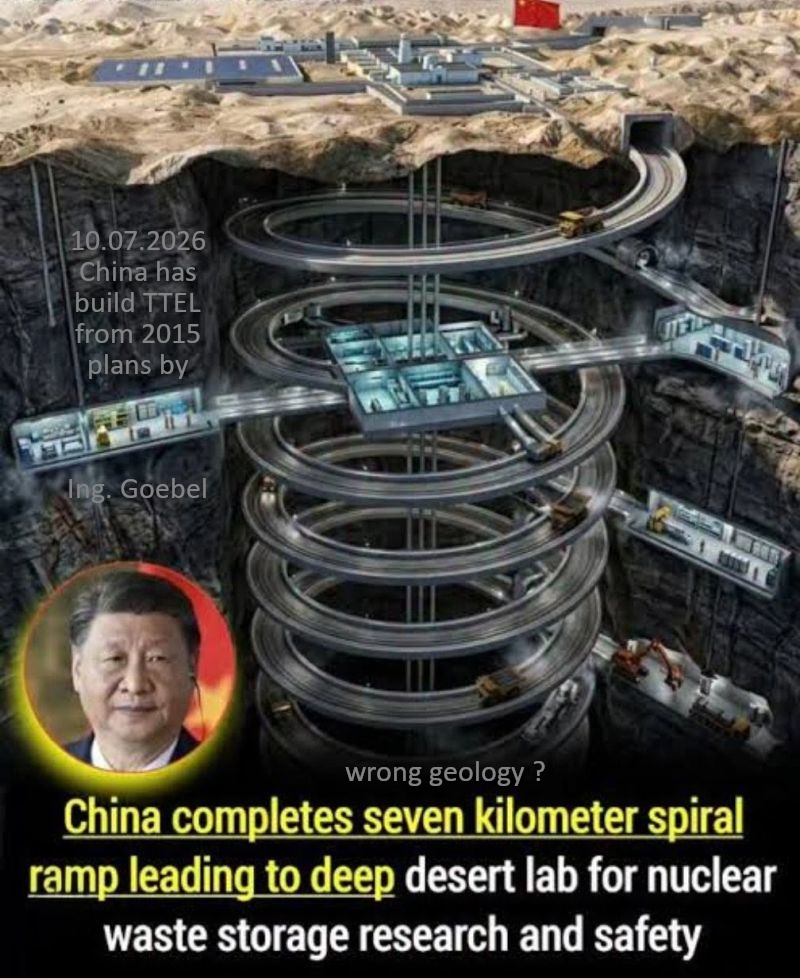
As 4 year GDF Engineer Planner i was not happy
it was not what i had suggested - and now it is
build ? 10 years later - can we come a visit ?
https://de.wikipedia.org/wiki/Xi_Jinping#/media/Datei:P060813PS-0399_(9314669123).jpg
- President Xi Jinping is such living Buddha -
His Engineers did GDF so careful - no protests
only progress - well - lets think Beishan Lab
further - Is the conditions good or bad ? to
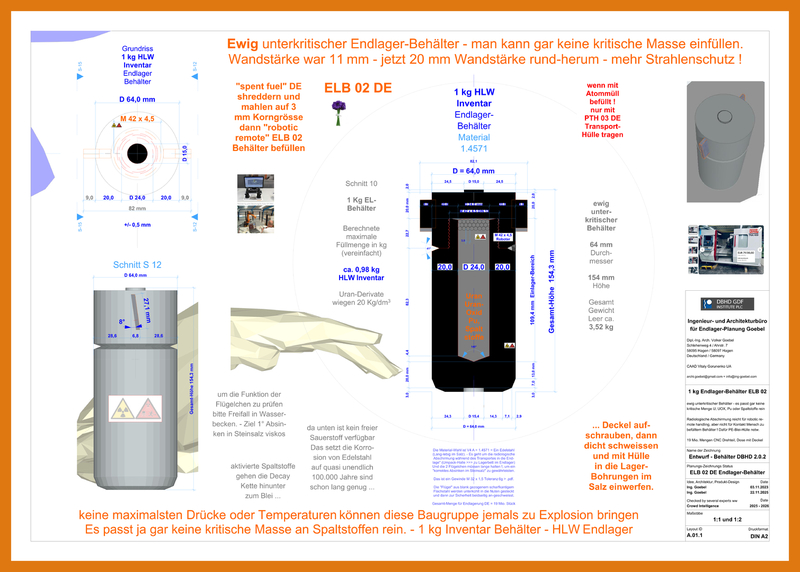
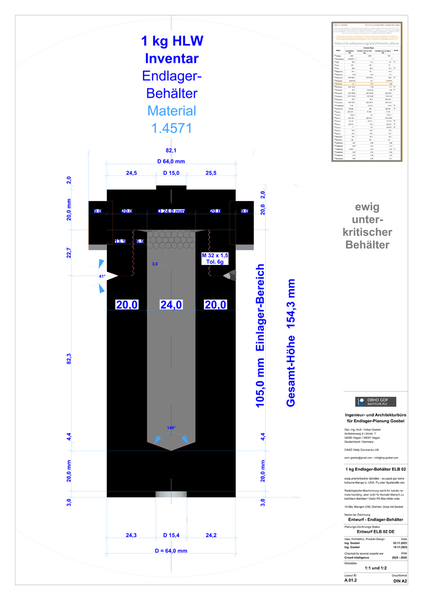
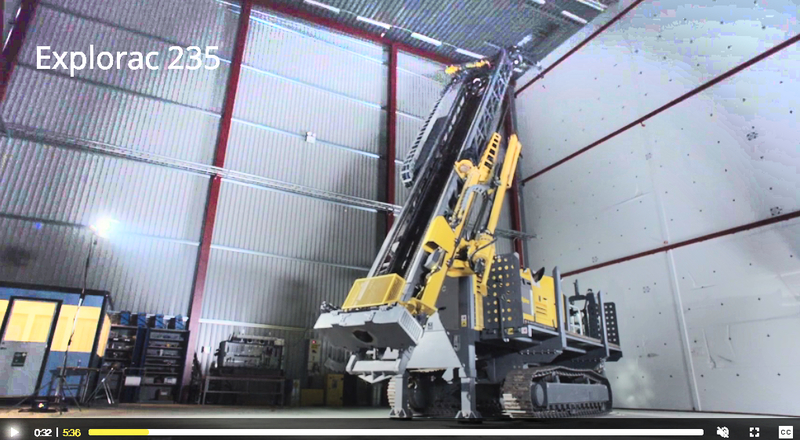
do Explorac 235 drills - to store ELB in PTH
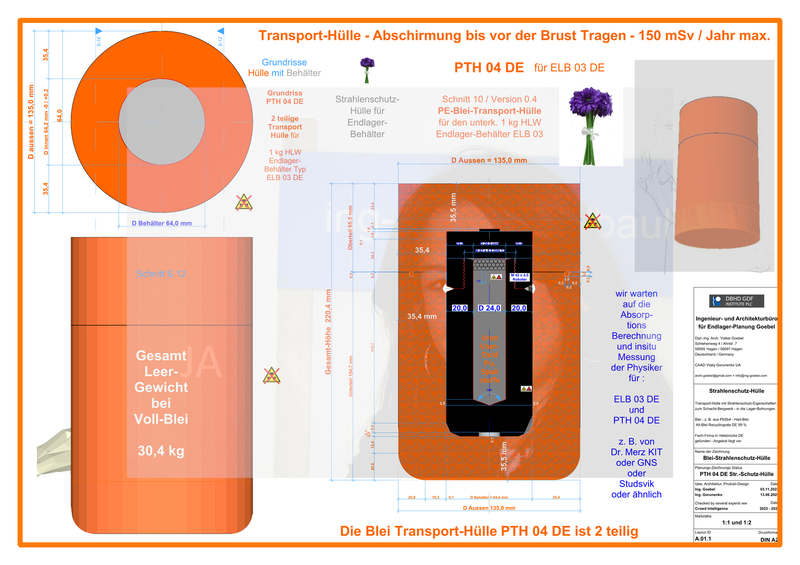
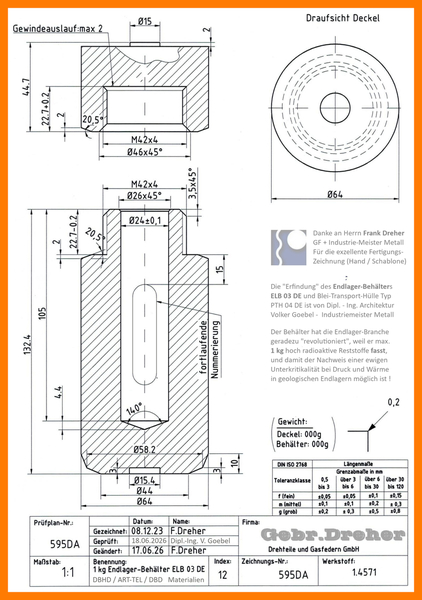
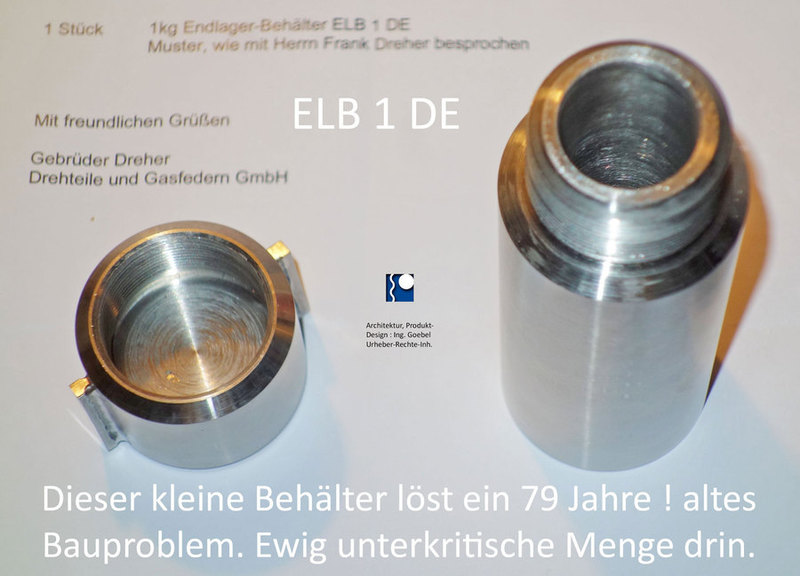
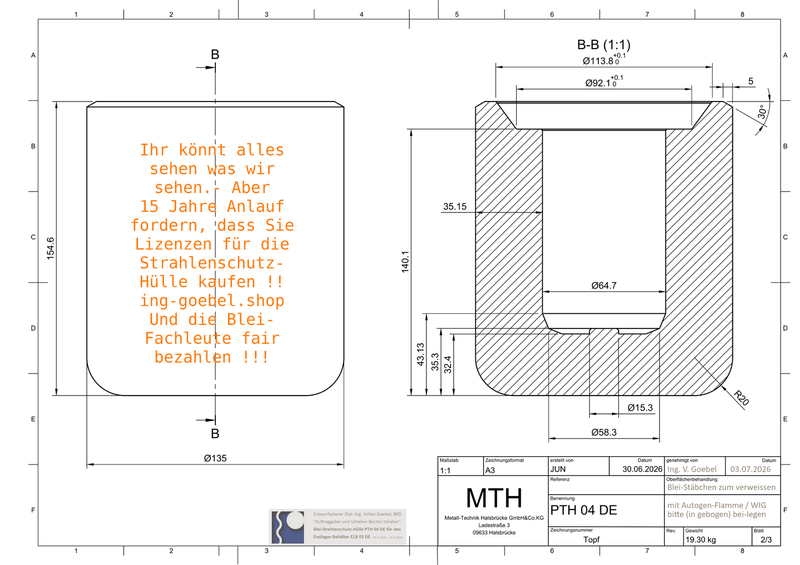
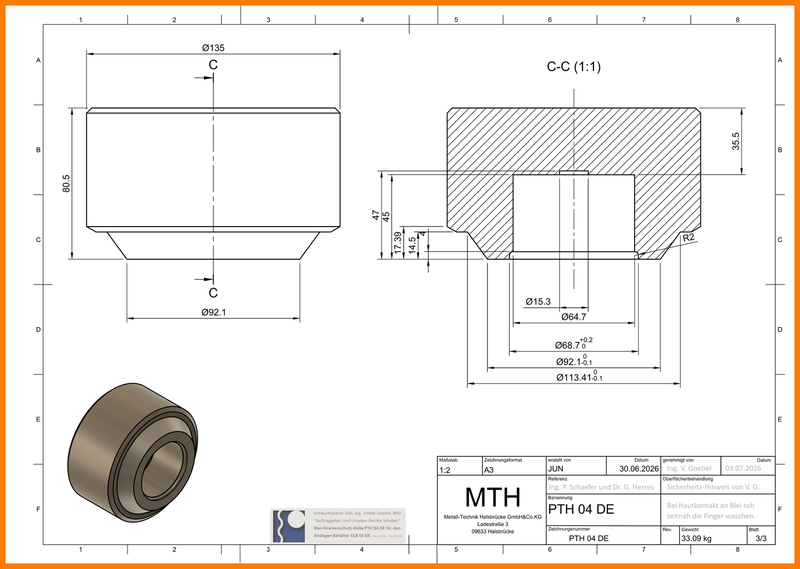
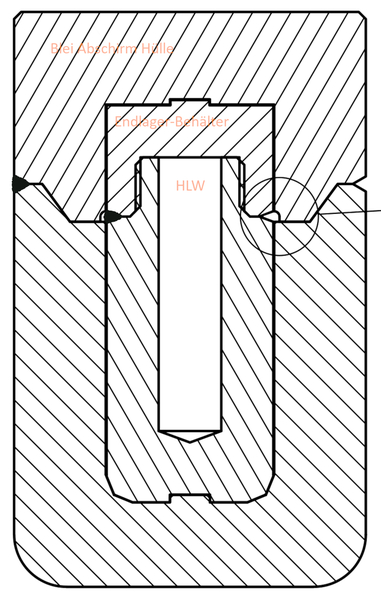
could you please buy licenses for ELB 03 GDF Container
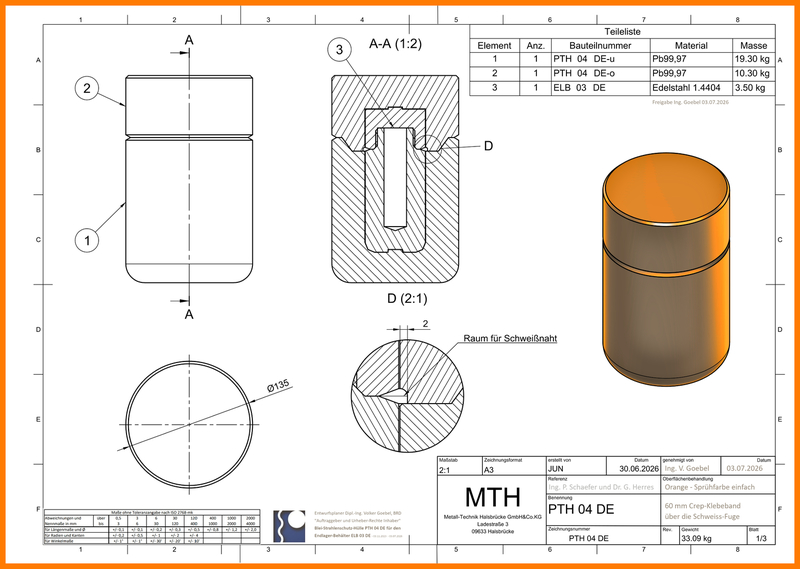
and PTH - Protection Transport Hull - PTH 04 from DE
You are in hardrock - Granite you say - on a geological
island - will it become a water cooled GDF ? - It will
never be eternal gas-tight in hardrock - Does China
have salt domes or flat salt min 500 m deep and
min. 500 m think ? - Its the Epiroc 235 storage drills
and the GDF bundle you still have to copy to the better.

PDF-Dokument [7.1 MB]
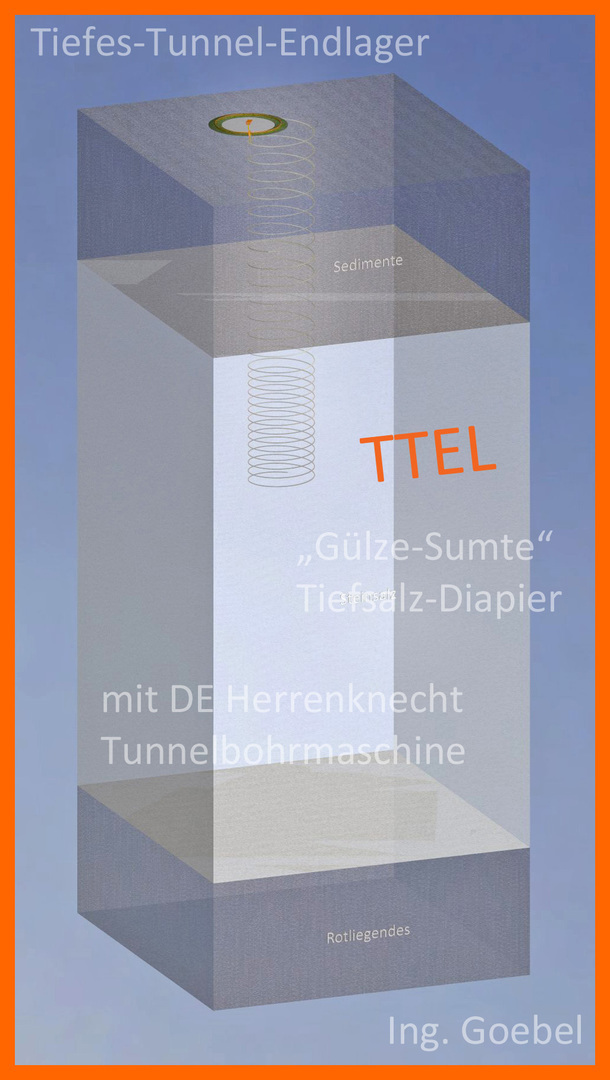
TTEL was a 2015 spark idea vision by architect Ing. Goebel
by that time he was busy with buildings, plans and GDF
in Switzerland - Brunnen - with his own new ArchiCAD 20.
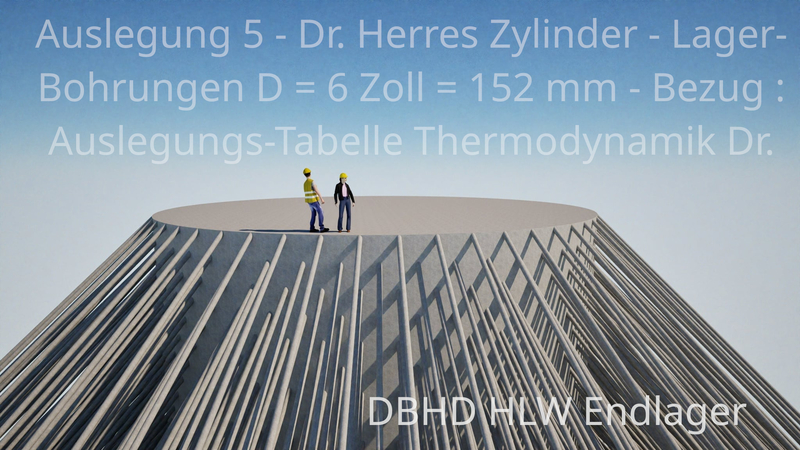
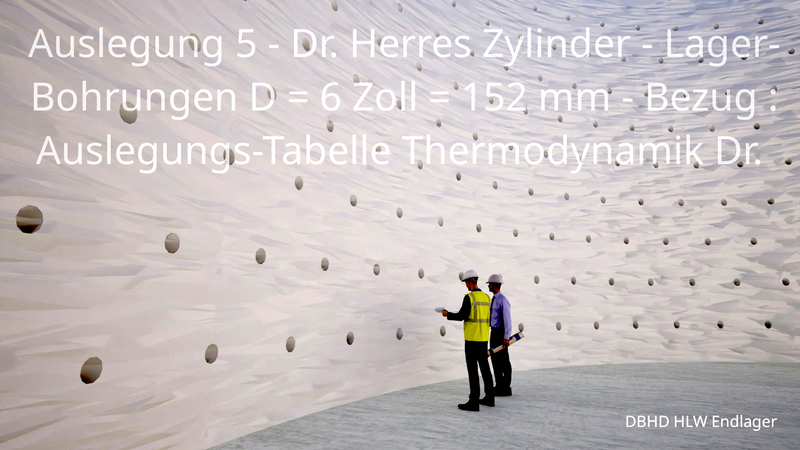
I would call this an historic picture - rocksalt dome -
with an overburden - not thick enough i would say !
And a loong spiral - would have made you dizzy and
the statics ! - one above the other would have made
you dizzy !? - Would have been a loooong 1 and only
one opening thing. - That was the spark vision ... It
was never carried out exactly - Puuuhhh - the China
engineers improved it with implementation planning.
Since 2015 i love China - today is 10.07.2026
have been driving into China from Hongkong
Send me some China Airways ticket - let me
see you lab and measure a bit - I will discuss
a future GDF with your engineers ...
Every real GDF has an architecture.
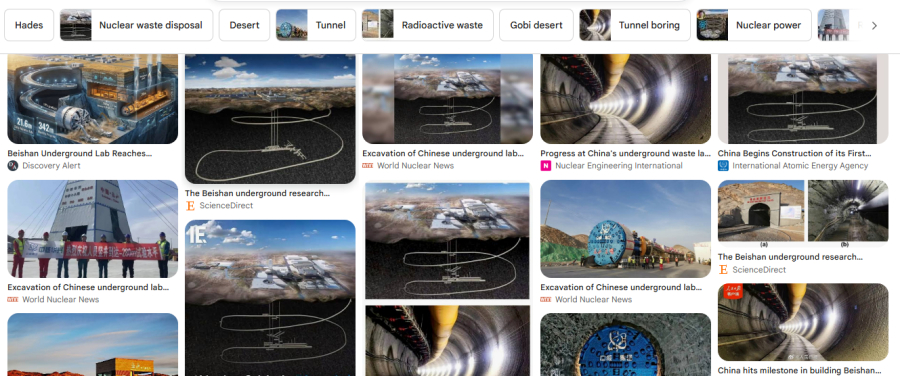
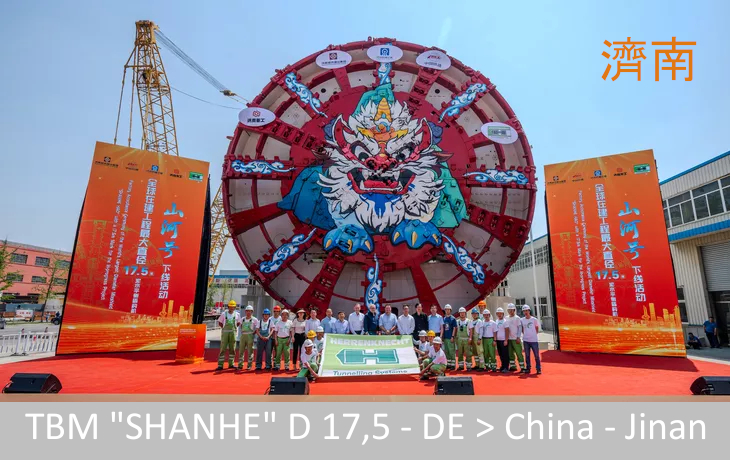
So this is what happend - China drilled it - with TBM
TBM in ? - it looks like granite, hardrock - Diameter ?
Its still a spiral ramp - but with long straight downward
sections - OK - that is clever implementation planning.
Ing. Goebel says - it will be an undeep, therefore wet,
not gas-tight NonGDF with no proof of eternal under-
criticalness - Am i right ? - Are you facing exactly
these problems ? - How is your lab working ? - Did
you find out about thinking a GDF in your 560 m cellar ?
Are now sure ? you know what you want to build as GDF ?
Are you seeking now my OK to drill with Explorac 235 from
Epiroc SE ? - Do you need small GDF containers to make
your lab a real GDF location ? - Are you able to copy the
thermodynamic calculation for an ART-TEL HLW GDF CN 01
Best greetings to Beishan National GDF Lab. in Beishan China
Volker Goebel - your 1st vision maker - your peer reviewer.
China is such a wonderful country - ingenious people
people that really work on it - Challenging tasks !
The inventor of the gun-powder and great wall
catches up with time - and aims to be the best.
Simply the best - they copy your uncomplete ideas
to top world level ? in a usefull, intelligent manner .
< Show some RESPECT to China -
Lets do some talks - all staff working in the
underground lab - miners - researchers - engineers
bosses - architects and lets hear a women too.

The Beishan Underground Research Laboratory (URL) is situated in a remote, highly isolated area
of the Gobi Desert. Because it is a massive government research facility in an unpopulated region,
it does not have a traditional street or postal address. [1, 2]
The site can be identified and contacted using the following geographical and corporate information:
Geographical Location
-
Location: Xinchang Site, Beishan Pre-selected Area, Gansu Province, Northwestern China
-
Proximity: It is located in the arid Gobi Desert region, relatively close to Jiuquan City. [1, 2]
Primary Managing Authority / Corporate Contact
The facility is managed and primarily constructed by the Beijing Research Institute of Uranium Geology (BRIUG) and the China National Nuclear Corporation (CNNC). For institutional or official correspondence, mail should be directed to their headquarters: [1, 2, 3]
-
Institution: Beijing Research Institute of Uranium Geology (BRIUG)
-
Address: 10 Liangxiang East Road, Fangshan District, Beijing, China, 102413
If you are researching the project's geological parameters, you can review the Beishan Underground Research Laboratory Report via the IAEA. [1]
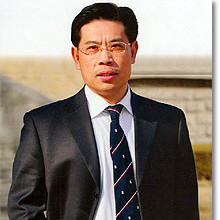
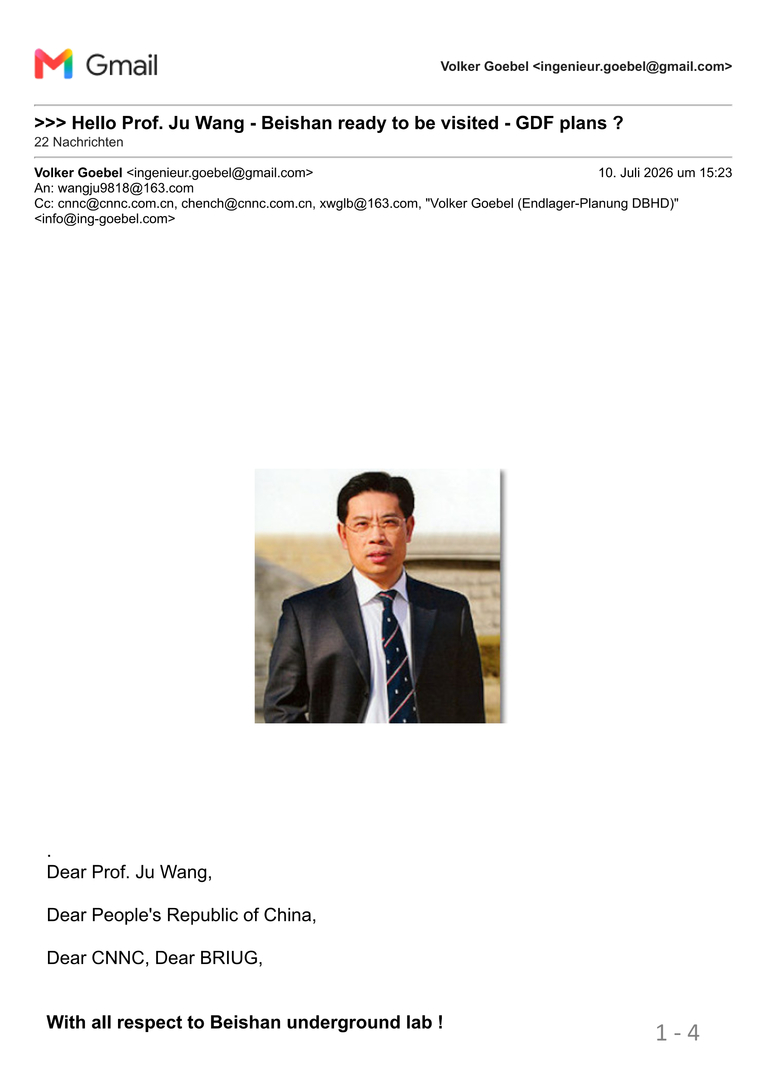
Prof. Ju Wang is the main GDF developer in China.
We had contact in 2018 - shall we see in your lab ?
Please book a travel-work-week in ing-goebel.shop
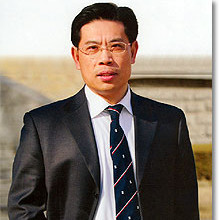
Dear Prof. Wang - please check geological data
is there rocksalt domes or layers in China ?
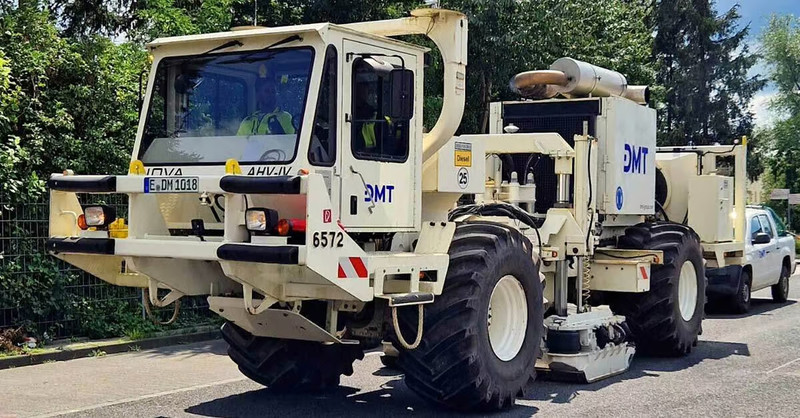
Order Seismic Campain or Vibro Trucks to be more precise
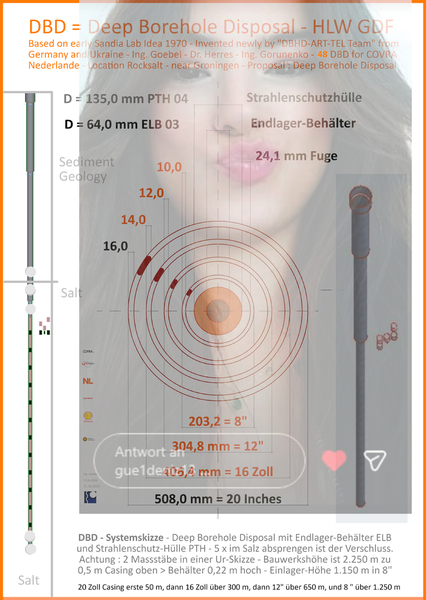
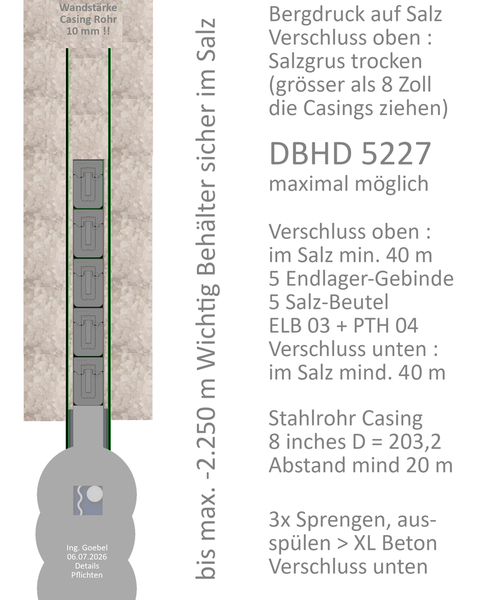
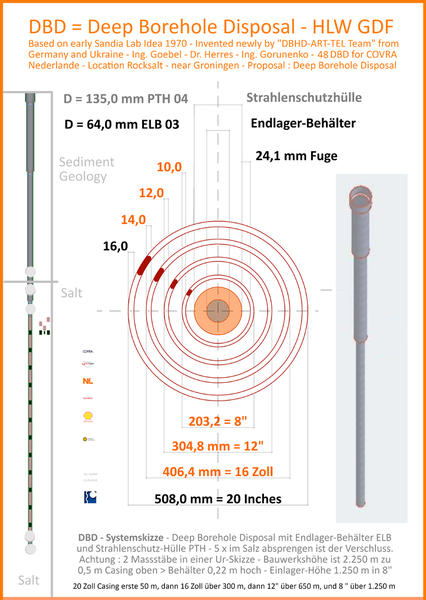
Then we can help you with ART-TEL - or - DBHD - or - DBD
Do you have GDF Container and Protection Hull already ?
If you can copy it to the better - save the world ...
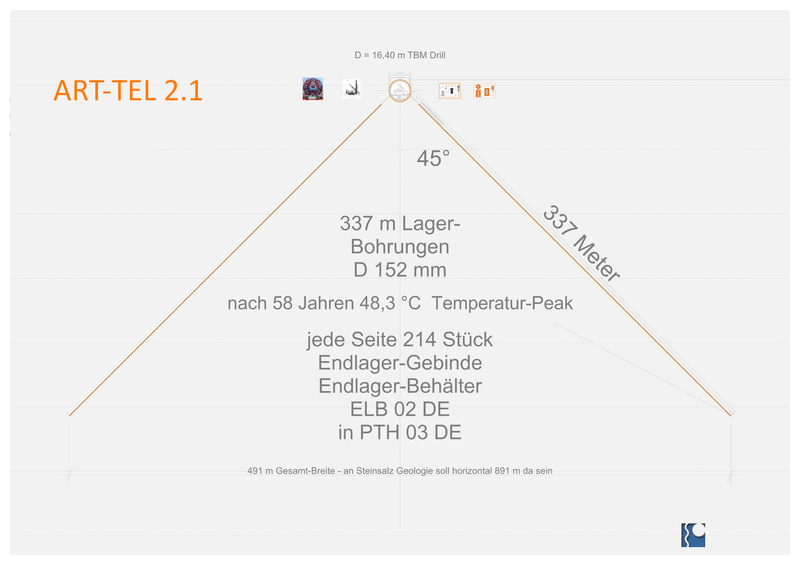
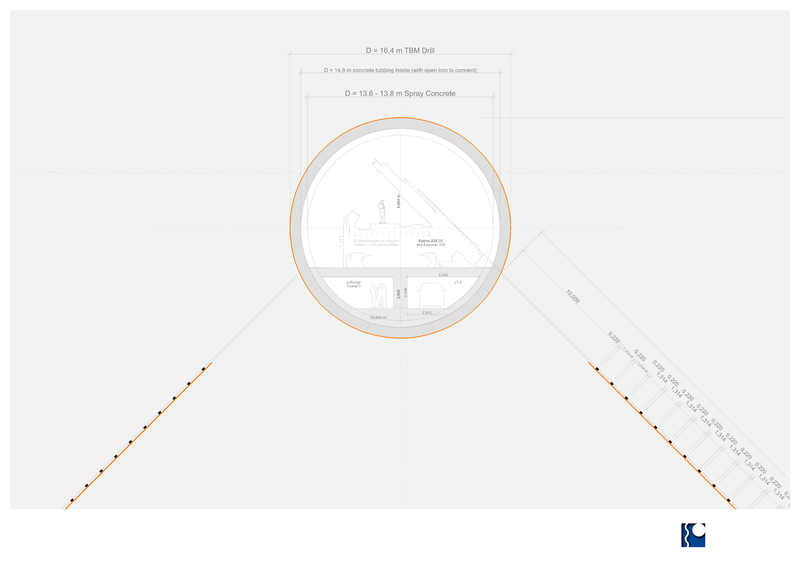
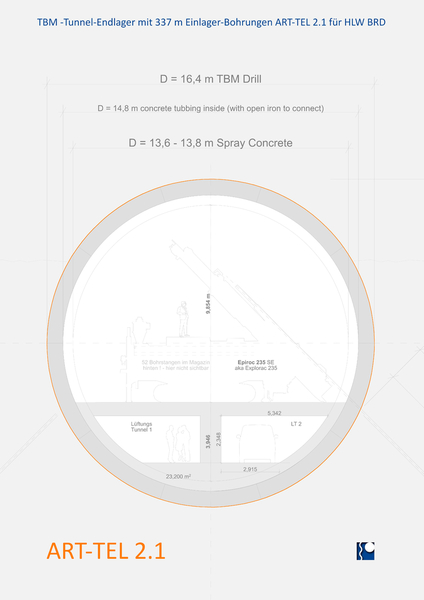


- Spiral Ramp Completed: Engineers finished excavation on a 7-kilometer spiral access tunnel descending at a 10% gradient to depths of 560 meters underground.
- Shafts Connected: The main underground structural framework (including the ramp, three vertical shafts, and horizontal test galleries) has been connected.
- Next Steps: With the heavy excavation phase finished, the focus is shifting to building the two nuclear technology test platforms at depths of 280 meters and 560 meters. [1, 2, 3, 4]
Sehr geehrte MdB im Umwelt-Ausschuss,

- Hochradioaktiver Abfall (HLW): Ca. 3 % sind hochradioaktive Spaltprodukte und Transurane (wie Americium und Neptunium). Diese werden in flüssiger Form konzentriert, mit flüssigem Glas verschmolzen (verglast) und in dichte Edelstahlbehälter gegossen. Der resultierende Abfall macht pro Tonne Brennstoff etwa 250 bis 300 Liter aus.
- Mittel- und schwachradioaktive Abfälle (LILW): Ca. 1 % sind kontaminierte Materialien wie zersägte Hüllen der Brennelemente (Cladding), Reinigungschemikalien und Betriebsmittel. [1, 2, 3, 4, 5]
- Cäsium-137 (Cs-137): HWZ ca. 30 Jahre. Starker Gamma-Strahler. Verursacht den Großteil der Strahlung in den ersten Jahrhunderten. [1, 2, 3]
- Strontium-90 (Sr-90): HWZ ca. 29 Jahre. Reiner Beta-Strahler. Verhält sich chemisch wie Calcium und lagert sich bei Aufnahme in Knochen ein. [1, 2, 3]
- Krypton-85 (Kr-85): HWZ ca. 11 Jahre. Ein Edelgas. Wird bei der Wiederaufarbeitung oft kontrolliert abgelassen, verbleibt aber teilweise im Abfall. [1]
- Technetium-99 (Tc-99): HWZ ca. 211.000 Jahre. Sehr mobil im Grundwasser, weshalb es bei Sicherheitsanalysen für Endlager extrem wichtig ist.
- Iod-129 (I-129): HWZ ca. 15,7 Millionen Jahre. Ebenfalls sehr mobil. Reichert sich in der menschlichen Schilddrüse an.
- Cäsium-135 (Cs-135): HWZ ca. 2,3 Millionen Jahre. Ein langlebiger Verwandter des Cs-137.
- Selen-79 (Se-79): HWZ ca. 327.000 Jahre. [1, 2, 3]
 Druckversion
Sitemap
Druckversion
Sitemap
Volker Goebel / Dipl.-Ing. / Tel +49 157 546 624 34 DE / info@ing-goebel.com / archi.goebel@gmail.com - Konnte am 08.03.2025 und 14.04.2025 nach 14 Jahren !!! eine vollständige Endlager-Planung nachweisen.
